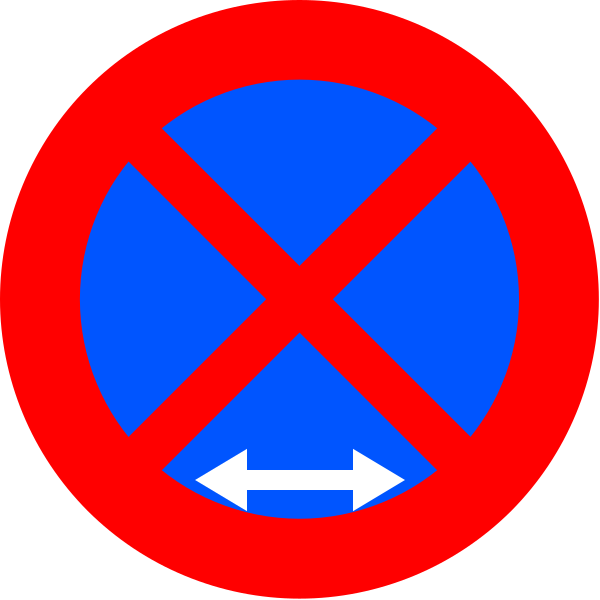
You see this sign by the kerb of a street. Where does the ban it sets apply?
Why
The double-headed arrow means the ban on stopping and parking extends in both directions from the sign. You may not stop or park either before or after it. Thinking it only applies ahead is the typical mistake: that is the case with signs whose arrow points one way only.
Legal basis: RGC art. 145 y anexo I (R-307a)
About this sign: R-307a No stopping or parking, either side of the sign
The same question in Spanish (if you take the exam in Spanish)
Ve esta señal junto al bordillo de una calle. ¿Dónde rige la prohibición que establece?
- Solo en el tramo anterior a la señal, hasta la esquina más cercana.
- A ambos lados de la señal, antes y después de ella.
- Solo en el tramo posterior a la señal.
Share:
← Previous questionNext question →
More questions from this lesson
- In a shopping street, this sign has an arrow pointing one way. What does that arrow show?
- At the entrance to a country track you see this sign. Who does it ban from entering?
- You see this sign in a street. What does it prohibit?
- On a road you see this sign showing the number 60. What does it tell you?
- On a stretch with this sign you catch up with a cyclist. May you overtake?
- You are driving on a road with this sign. Who is affected by the ban it imposes?
An original Drive Mundo question, written from the traffic rules. Not an official DGT question.