Often confused with

Questions about this sign
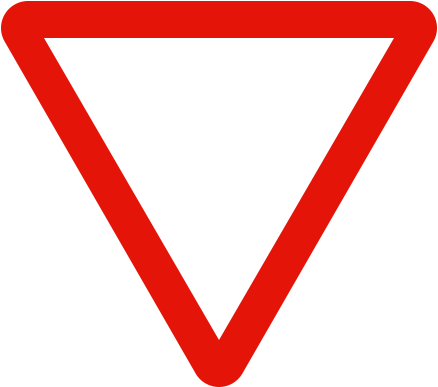
Sign R-1 requires you to…La señal R-1 obliga a…
✓ give way, stopping only if necessary.ceder el paso, deteniéndose solo si es necesario.
Give way: you needn't stop if nobody's coming, but you must yield to traffic on the road you're joining.
A traffic light is flashing amber and at the same junction there is an R-1 sign. What should you do?Un semáforo emite luz amarilla intermitente y en la misma intersección hay una señal R-1. ¿Qué debe hacer?
✓ Give way, as sign R-1 requires.Ceder el paso, conforme a la señal R-1.
A flashing amber light does not control who goes first: it means take extra care. Priority is then set by the upright signs, here a give way sign.
You are on a road with sign R-3. At a junction, a vehicle approaches from your right on a road with a give way sign. Who goes first?Circula por una vía con la señal R-3. En una intersección, un vehículo se acerca por su derecha desde una vía con señal de ceda el paso. ¿Quién pasa primero?
✓ You, while staying alert in case the other driver does not give way.Usted, pero sin dejar de prestar atención por si el otro no cede.
Signs override the right-hand rule. You have priority, but should not take it for granted.
What shape is the give way sign?¿Qué forma tiene la señal de ceda el paso?
✓ A triangle with one point downwards.Triángulo con un vértice hacia abajo.
Give way (R-1) is the only upside-down triangle. Point-up triangles are warning signs; the octagon is STOP.
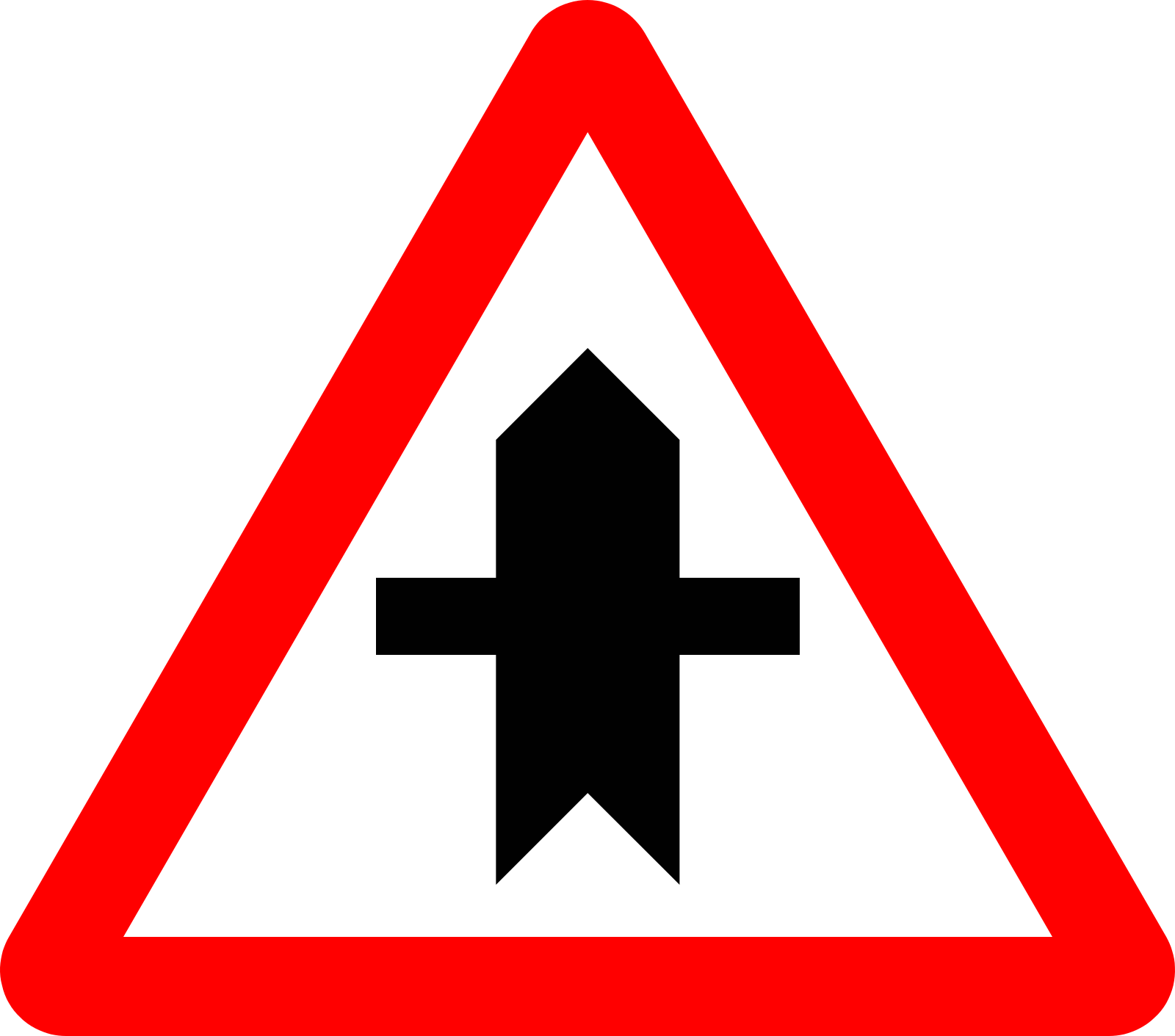
What does sign P-1 (a cross in a red-bordered triangle) tell you?¿Qué le indica la señal P-1 (cruz en un triángulo de borde rojo)?
✓ That you are approaching a junction where you have priority.Que se aproxima a una intersección en la que usted tiene prioridad.
P-1 warns of a junction where you have priority over the crossing road. Do not confuse it with R-1 (you give way) or P-2 (priority to the right).