Course step 19 of 29 · Accidents and first aid
PAS: protect, alert, help
Roadside first aid follows three steps, always in this order: PAS. Proteger (protect) the scene so nobody else gets hurt; Avisar (alert) the emergency services on 112; Socorrer (help) the injured. Protecting comes first because a second crash can injure more people, including you. Helping comes last not because it matters less, but because it is only safe once the first two are done.
How the law puts it«Conducta PAS ante un accidente: proteger, avisar y socorrer, por este orden.» Check
Arriving first at a crash, what should you do first?
Al llegar el primero a un accidente, ¿qué debe hacer en primer lugar?
Without protecting the scene, you and the injured can be hit in a second crash.
What does the 'A' in PAS stand for?
¿Qué significa la «A» de la conducta PAS?
PAS: Proteger, Avisar, Socorrer. Helping the injured is the 'S'.
To protect the scene, stop safely past the crash, off the carriageway if you can, and switch on hazard lights. Put on your reflective vest before stepping onto an interurban road. Since 1 January 2026 the connected V-16 beacon, placed on the roof, is the only legal device for warning that a vehicle is stopped; warning triangles no longer count. Switch off the engines and don't smoke.
How the law puts it«Desde el 1 de enero de 2026, la señal V-16 conectada es el único dispositivo válido de preseñalización de peligro.» Check
Since 1 January 2026, to signal a vehicle stopped on the road you must use...
Desde el 1 de enero de 2026, para señalizar un vehículo inmovilizado en la calzada debe utilizar...
The connected V-16 is the only valid device, and it is used together with hazard lights.
Where does the V-16 beacon go?
¿Dónde se coloca la señal V-16?
It goes on the roof, so nobody has to walk along the road, which prevents people being hit.
Call 112. It's free, works across the EU and coordinates police, ambulance and fire services. Say where you are as precisely as you can: road, kilometre point, direction of travel and any landmark. Then say how many vehicles and injured there are, whether anyone is trapped, and any risk such as fire or leaking fuel. Don't hang up until the operator tells you to.
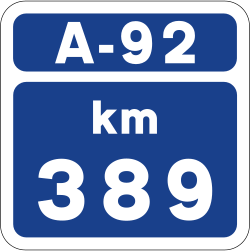
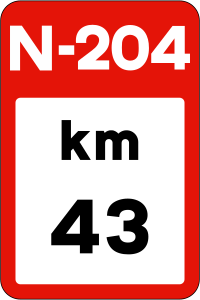
How the law puts it«Avisar a los servicios de emergencia facilitando la localización exacta del accidente y el número de heridos.» Check
When calling 112, which detail comes first?
Al avisar al 112, ¿qué dato es prioritario?
Without a precise location, help can't arrive, however good the rest of the information is.
When should you end the call to 112?
¿Cuándo debe colgar la llamada al 112?
The operator may need more details or give you first-aid instructions.
✓ Lesson complete
Chapter finished
Now lock it in with this chapter’s exam questions. That’s what helps you remember it most.