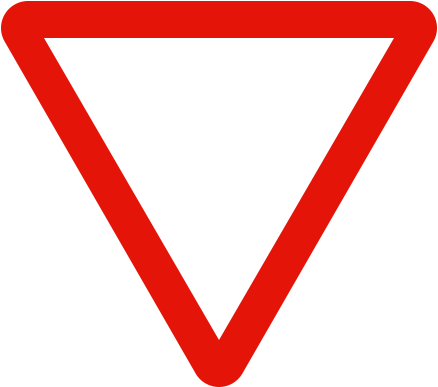
A fellow learner mistakes this sign for a danger sign. Which group of signs does it actually belong to?
Why
This is the give way sign, which belongs to the priority signs: it requires you to give way at the next junction. Although it is also triangular, it points downwards, whereas danger signs point upwards. Roadworks signs are recognised by their yellow background.
Trap Check which way the point faces: down means give way; up means danger.
Legal basis: RGC art. 145 y anexo I, apdo. 5 (catálogo de señales, RD 465/2025) (R-1)
The same question in Spanish (if you take the exam in Spanish)
Un compañero de autoescuela confunde esta señal con una de peligro. ¿A qué grupo de señales pertenece en realidad?
- A las señales de advertencia de peligro.
- A las señales de prioridad.
- A las señales de obras, de carácter temporal.
Share:
← Previous questionNext question →
More questions from this lesson
- At roadworks, the yellow-background signs contradict the permanent white-background signs. Which must you obey?
- Below a dangerous bend sign there is a distance plate showing “400 m”. What does it mean?
- Below the falling rocks sign, a plate shows the length of the affected stretch: “3 km”. What should you understand?
- You see a pedestrian crossing danger sign and there is no other sign. Do you have to stop?
- Below a dangerous bends sign there is a no overtaking sign. What must you comply with?
- A danger sign comes with a supplementary plate bearing a short text. What is that plate for?
An original Drive Mundo question, written from the traffic rules. Not an official DGT question.