Course step 3 of 29 · Definitions
Parts of the road
The 'calzada' (carriageway) is the part of the road meant for vehicles. It is split into 'carriles' (lanes): longitudinal strips, marked or not, wide enough for one line of vehicles other than motorcycles. A lane exists even when no lines are painted. The pavement ('acera') is for pedestrians and is not part of the carriageway.
How the law puts it«Calzada: parte de la carretera dedicada a la circulación de vehículos. Se compone de un cierto número de carriles.» Check
What is the 'calzada'?
¿Qué es la calzada?
The carriageway is only the part for vehicles; pavements and hard shoulders are outside it.
Can a carriageway with no road markings have lanes?
Una calzada sin marcas viales, ¿puede tener carriles?
A lane is defined by its width, whether or not it is marked.
The 'arcén' (hard shoulder) is the surfaced strip beside the carriageway. It is not for cars except in exceptional circumstances, such as a breakdown. It is not an extra lane: you don't use it to overtake or to get ahead in a queue. Some slow vehicles and pedestrians use it where the rules say so.
How the law puts it«Arcén: franja longitudinal afirmada contigua a la calzada, no destinada al uso de automóviles más que en circunstancias excepcionales.» Check
Is the hard shoulder part of the carriageway?
El arcén, ¿forma parte de la calzada?
The hard shoulder runs beside the carriageway but is not part of it, even when surfaced.
When may a car use the hard shoulder?
¿Cuándo puede un turismo utilizar el arcén?
The hard shoulder isn't for cars except in exceptional situations.
An 'autopista' has separate carriageways for each direction, no level crossings or junctions at the same level, and no access from adjoining property. An 'autovía' also has separate carriageways but may allow limited access from adjoining property. For a car driver the general limit is the same on both: 120 km/h.
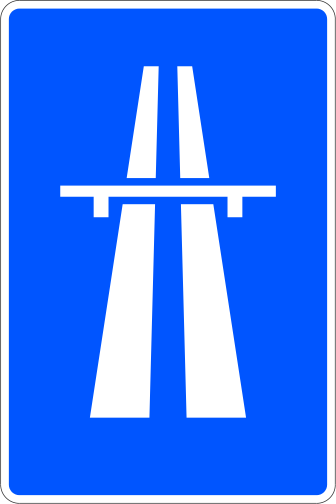
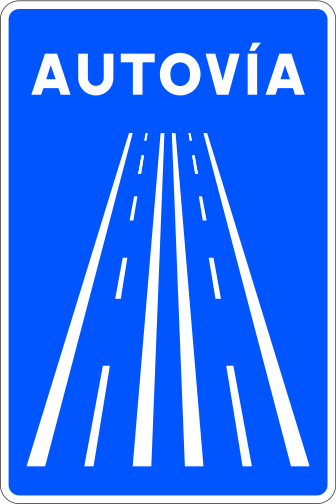
How the law puts it«Autovía: carretera que, sin reunir todos los requisitos de autopista, tiene calzadas separadas y acceso limitado desde las propiedades colindantes.» Check
Which feature tells an autovía apart from an autopista?
¿Qué característica permite diferenciar una autovía de una autopista?
Both have separate carriageways; an autopista allows no access from adjoining property, an autovía allows limited access.
What is the general speed limit for a car on an autovía?
¿Cuál es la velocidad máxima genérica de un turismo en autovía?
Autopistas and autovías share the 120 km/h general limit for cars.
✓ Lesson complete
Chapter finished
Now lock it in with this chapter’s exam questions. That’s what helps you remember it most.