Course step 6 of 29 · Regulatory signs (R)
Priority signs
The upside-down triangle (R-1) means give way: traffic on the road you are approaching goes first. You only have to stop if someone is coming or you can't see well enough to be sure. If the road is clear, you may carry on without stopping. Slow down early so the decision is calm, not a last-second brake.
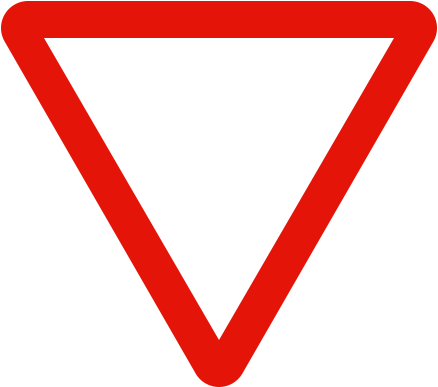
How the law puts it«Ceda el paso: obligación de ceder el paso a los vehículos que circulen por la vía a la que se aproxime.» Check
At a give-way sign (R-1), must you stop?
Ante una señal de ceda el paso (R-1), ¿está obligado a detenerse?
R-1 means give way, not stop in every case. If the road is clear you may continue.
What shape is the give-way sign?
¿Qué forma tiene la señal de ceda el paso?
It is the only inverted triangle. The octagon is STOP and an upward triangle is a danger sign.
The red octagon STOP sign (R-2) means a complete stop, every time, even if the road looks empty. Stop at the stop line. If there is no line, stop just before the junction, at a point where you can see the traffic. Then give way to vehicles on the road you are entering. Rolling through slowly does not count as stopping.
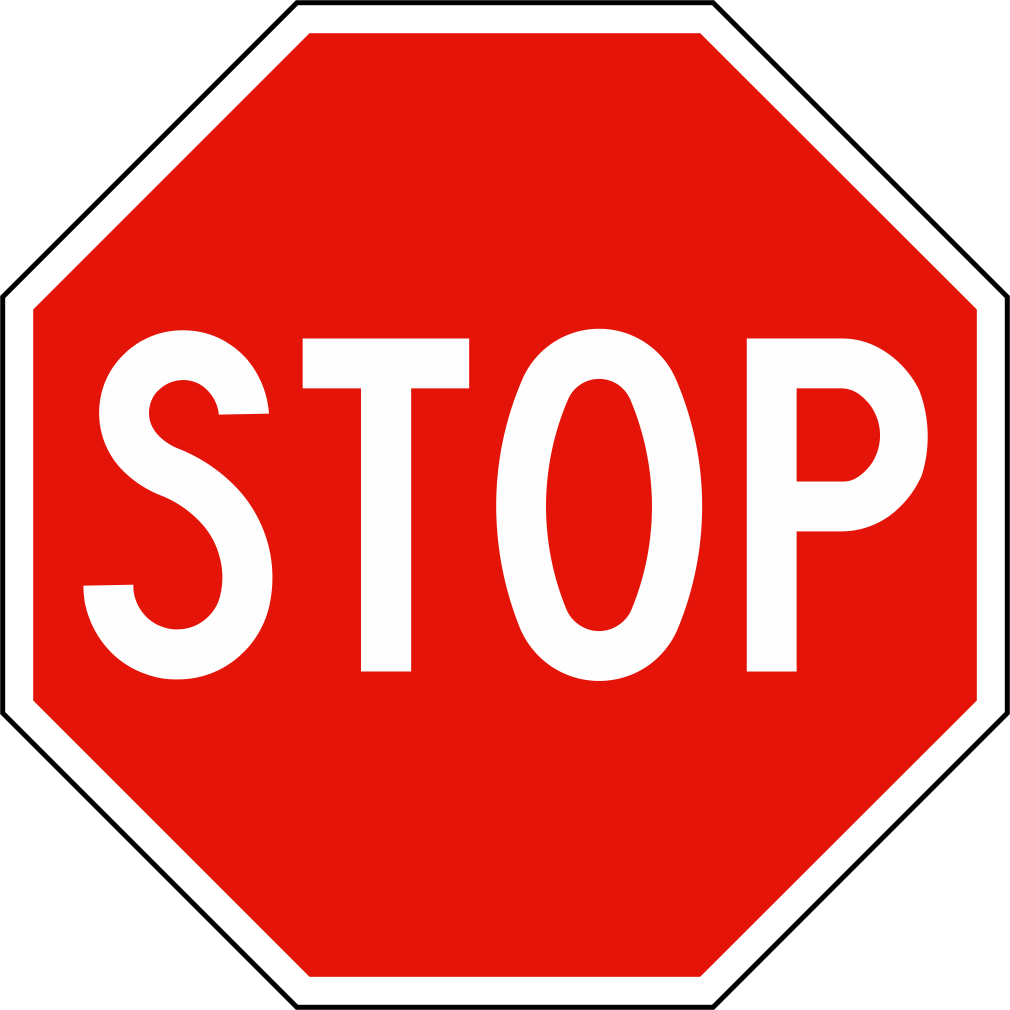
How the law puts it«Detención obligatoria: detenerse ante la línea de detención o, si no existe, inmediatamente antes de la intersección, y ceder el paso.» Check
At a STOP sign with no stop line, where must you stop?
En una señal de STOP sin línea de detención, ¿dónde debe detenerse?
Stopping is always compulsory. With no line, stop just before the junction, where you can see the traffic.
At a STOP sign no vehicle is coming. What must you do?
Ante un STOP no se aproxima ningún vehículo. ¿Qué debe hacer?
STOP requires a full stop even when the road is empty.
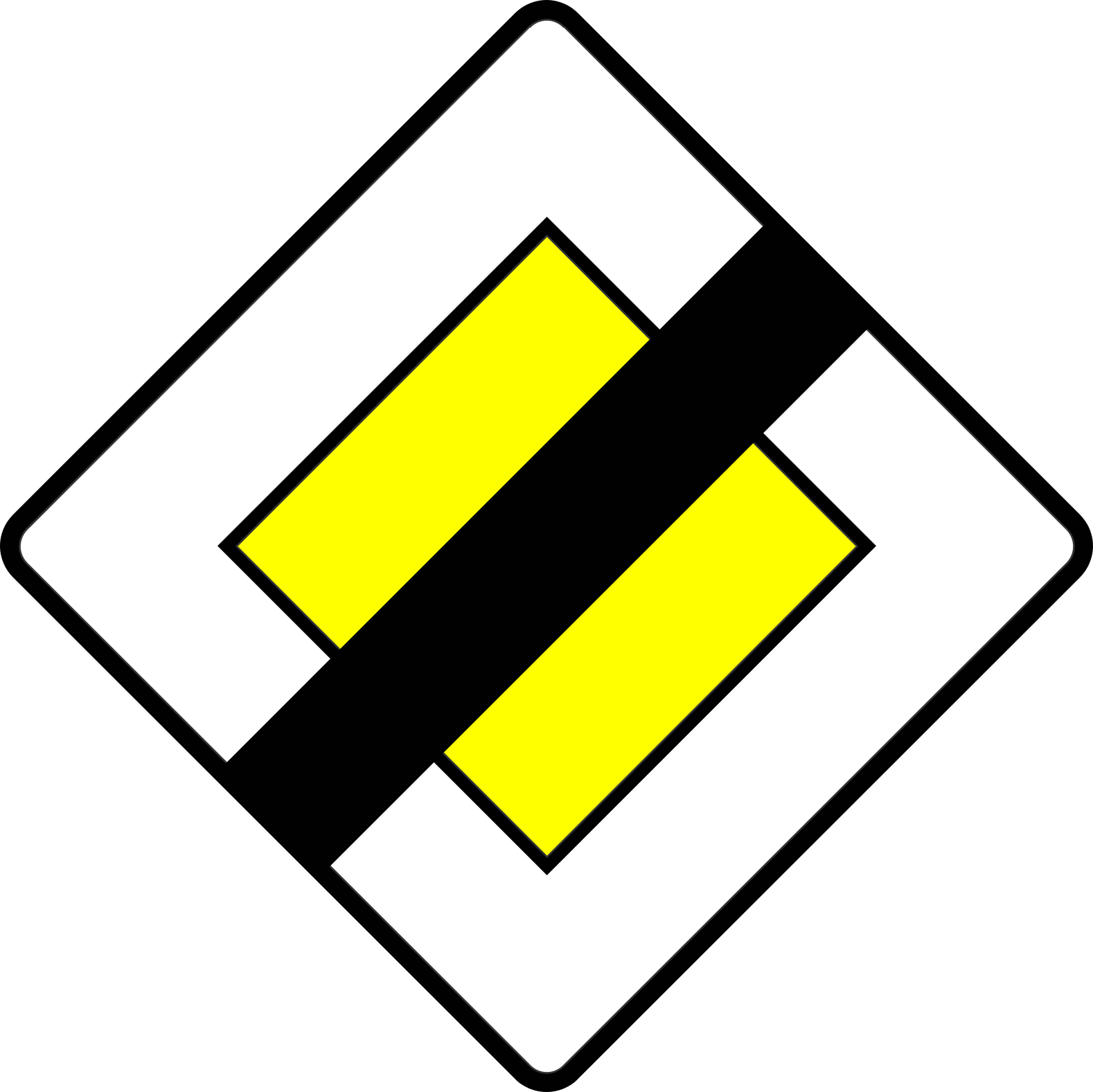
R-3, a yellow diamond with a white border, tells you that you are on a priority road: at junctions, traffic from other roads must give way to you. R-4, the same diamond crossed by black stripes, marks where that priority ends. After R-4 the general rules apply again, including giving way to the right where there are no signs.
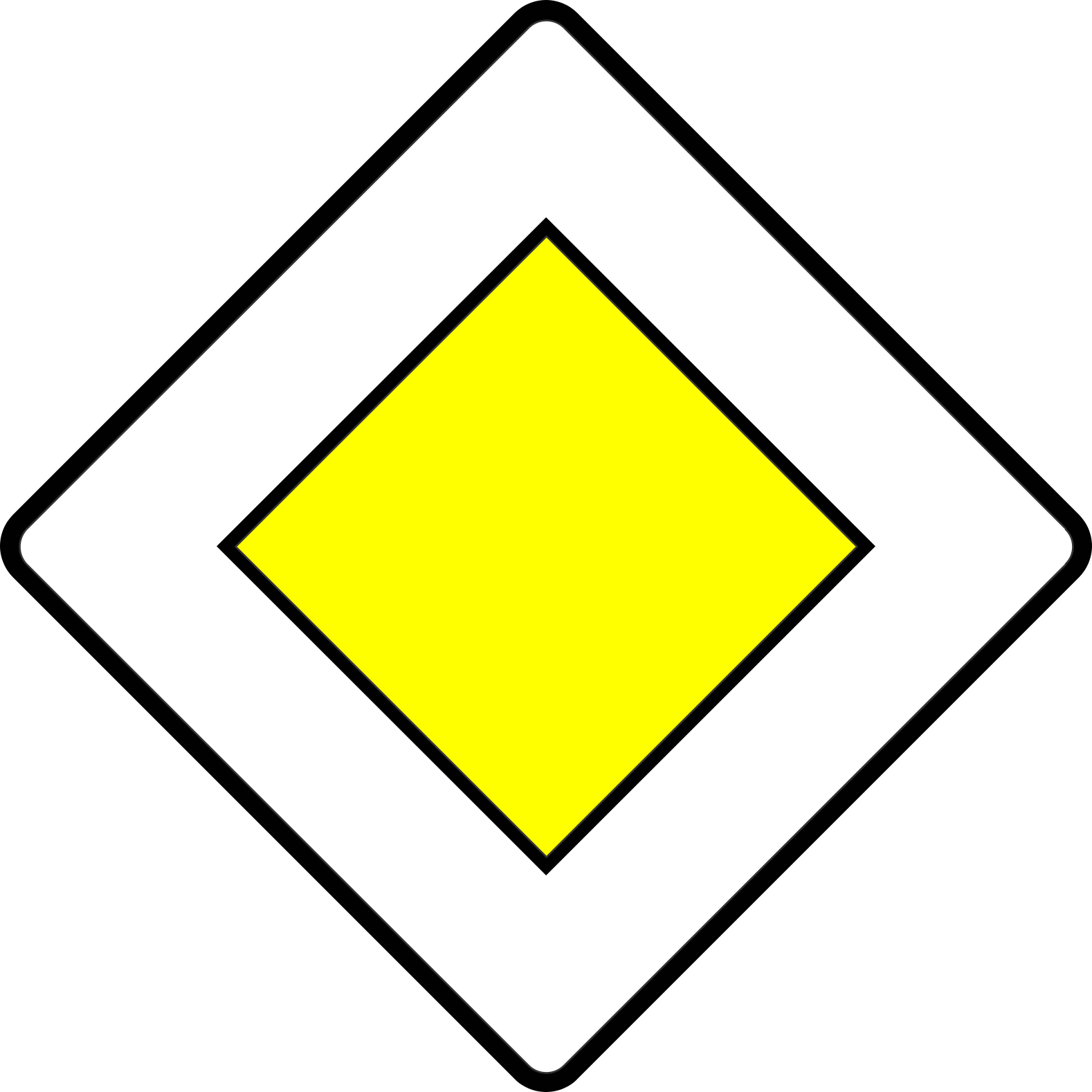
How the law puts it«Calzada con prioridad: prioridad en las intersecciones sobre los vehículos que circulen por otra calzada o procedan de ella.» Check
What does sign R-4 mean?
¿Qué indica la señal R-4?
R-4 is the crossed-out yellow diamond: the priority given by R-3 ends.
You are on a road signed R-3. A vehicle joins from a side road on your right. Who has priority?
Circula por una vía con la señal R-3. Un vehículo se incorpora desde una vía lateral por su derecha. ¿Quién tiene prioridad?
The R-3 sign overrides the general give-way-to-the-right rule.
At a narrow stretch where two vehicles can't pass, two signs share out priority. R-5, round with a red border, means oncoming traffic goes first: don't enter while someone is coming towards you. R-6, a blue square, means you have priority over oncoming vehicles. One end of the stretch gets one sign, the other end gets the opposite one.

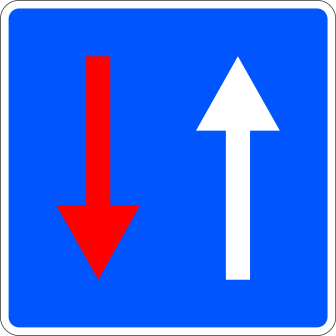
How the law puts it«Prioridad del sentido contrario: prohibido entrar en el paso estrecho mientras no pueda atravesarse sin obligar a detenerse a los que vienen de frente.» Check
At a narrowing you see sign R-6 (a blue square). What does it mean?
Al llegar a un estrechamiento encuentra la señal R-6 (cuadrada azul). ¿Qué significa?
R-6 gives you priority over oncoming traffic. The one that makes you give way is R-5.
There is an R-5 sign and a vehicle is already in the narrow stretch coming towards you. What must you do?
Hay una señal R-5 y un vehículo ya circula por el paso estrecho hacia usted. ¿Qué debe hacer?
With R-5 oncoming traffic has priority: wait until the stretch is clear.
✓ Lesson complete
Chapter finished
Now lock it in with this chapter’s exam questions. That’s what helps you remember it most.